Courses and Workshops

torey-websize-presenting-design james-macadam-design-present-websize jonathan-presenting-websizekeely-presenting-websize

Winter 2010

Advanced Permaculture Design Course – Second Annual

ADVANCED DESIGN COURSE ANNOUNCEMENT: We are stepping out of the box!

Our teaching guild is currently assessing the Advanced Design Course with the intention of creating a dynamic new program that is reflective of the depth and breadth of the Permaculture Site Assessment Process.

We will be offering advanced training in the form of periodic, shorter, one day Permaculture intensive sessions.

We will be working together to create a new format that will engage both teachers and students. We are excited about shaping this new offering so that Permacultuer graduates will gain an expanded understanding of sustainable design insights, principles, and techniques. These sessions will serve as a solid base from which to develop a deeper understanding of Permaculture site analysis, patterning, and design.

Stay Tuned!

Spring 2010

The 15th Annual Permaculture Design Course

Registration for this course opens on Sept. 1st, 2009

Participants in the 14th Annual Design Course in 2008 pictured below.

2009-grad-picture-1-small

Five Weekends in February and March  -   Feb. 6th, 7th; Feb. 13th, 14th, Feb. 27th, 28th; Mar. 13th, 14th; Mar. 20th,21st
9:00 AM to 5:30 PM each day.
Cost $650, $595 for early registration (by December 31st). There is also
a class book fee of $39 for a copy of Introduction to Permaculture by Bill Mollison. Also highly recommended is Brad Lancaster’s Rainwater Harvesting for
Dry lands Vol 1 and Vol 2.

For the last seven years this course has
been full with a waiting list, so early registration is encouraged. To give a high
quality educational experience, we limit the size of the class to
eighteen participants. Contact dorsey@dakotacom.net or 624-8030 to register or see the information below for registration info and other FAQs.

This course is one of the longest running annual Permaculture courses in the U.S. and leads to a Permaculture design certificate. It covers all aspects of sustainable design with an emphasis on Southwest dry lands, including a balance of hands on experience, classroom time, and design practicum. Dynamic exercises encourage pattern recognition, noticing the links between plants and animals, climate, and landforms that make up natural ecosystems. These patterns are the basis for the Permaculture system of sustainable design.

The course focuses on dry land communities, addressing individual site and neighborhood “problems” such as storm water flooding. Students learn to read the landscape, to map and analyze energies flowing through a site, and to develop integrated designs for sustainable systems. The weekend format of the course makes it easier for people who hold a week day job to attend and promotes better integration of the course material into daily life.

Course topics include agro forestry, appropriate technology, building design, design principles and patterning, site analysis, dry land gardening principles, ecosystem restoration, philosophy and ethics of Permaculture, regenerative community economics, soils and erosion control, village and community design, water harvesting, and many other topics.

We take field trips to working Permaculture sites around Tucson, and you will have the chance throughout the course to design and begin implementing Permaculture on a site of your choosing. This course is challenging and fun, and it shows the whole big picture of
sustainable design in Southwest Dry lands and how sustainability and integrated design really work!

Site: The classroom will be in the Central Tucson area, and at other Permaculture sites in the Tucson area. Much of the class is held outdoors.

Taught and facilitated by Dan Dorsey, Brad Lancaster, Barbara Rose, and other teachers from the Sonoran Permaculture Guild, as well as professional guest instructors. For teacher profiles see the members link on this website. To register and for more information contact Dan Dorsey, course registrar, at 624 8030 or dorsey@dakotacom.net

Permaculture 2010 Design Course FAQ’s

How do I register for the 2010 Permaculture Design Course?
>
> We need a minimum of a non-refundable $100 deposit by
>  December 15th to get the discount rate and to hold you a place in the
>  course. Full payment is due 21 days before the first weekend.  Special
>  exceptions, like paying for the course weekend by weekend, can be made on a
>  case by case basis.
> There are three ways to pay or register for the course…
>
> 1. Checks and money orders can be made out to our
>  non-profit: “NEST/Sonoran Permaculture Guild”.
>  Please mail only checks and money orders (no
>  cash) to: Sonoran Permaculture Guild c/o Dan Dorsey 221 E. Linden Tucson, AZ 85705. Include your
>  return address, e-mail, and phone number, and you will be sent an e-receipt confirming your
>  registration
>
> 2. Cash, money orders, or checks can also be handed directly to Dan Dorsey, the course registrar
>  in person, and a receipt will be issued to you at that time. Call 624-8030 or e-mail dorsey@dakotacom.net to schedule a time to meet at our central office one and a half miles north of downtown Tucson.
>
>  3. You can pay by major credit card, as we are set up through PayPal
>  to handle those transactions, or if you already have a PayPal account you can pay from your
> existing PayPal balance. E-mail dorsey@dakotacom.net for this PayPal option, and I will e-mail you on how
>  to use your major credit card or existing balance.
>
> If after I register and pay, and the course starts, what
> if I have an emergency and need to cancel out?
>
> Our refund policy is as follows: If you have a serious
>  injury or illness, or if someone in your immediate family has a serious
>  injury or illness during the course, and you need to cancel out of the
>  entire course after it starts, we will refund to you a pro-rated amount
>  based on the weekends you have already taken.
>
What if I need to cancel before the course begins?
>
> If you are cancelling out of the entire course after you
> have already paid, we will refund your entire amount minus your $100
> deposit up to 21 days before the course begins. If you cancel at least 10
> days before the course begins we will refund 50% of what you have paid
> over $100. You may be able to apply any remaining funds you have paid over the $100
> deposit to next year’s course or future one day SPG classes.
> If the class if full and a person can be found to take your place you will receive a full refund minus your $100
> deposit.
>
> In the unlikely event the entire course is cancelled for any reason you will receive a full
> refund for any deposit or other funds you have payed.
>
What if I drop out of the course due to a non-emergency
> after the course begins?
>
> We decide refunds or credit in non-emergency situations on a case
> by case basis.
>
> What if I  have to miss a whole day or a weekend of the
>  course?
>
> We expect each participant to attend all the scheduled
>  weekends and classes, and you will get the most out of the course if you
>  do.  But we understand unexpected events come up. It is up to you if you
>  have to miss part of the course, but if you want your Permaculture
>  design certificate at the end, you might have to pay something extra to
>  meet with the instructor who was teaching during the missed period if he
>  or she is willing to go over the material. In some cases you may even
>  have to wait until next year’s course to make up the material and get
>  your certificate.
>
>  Are there scholarships and work-trade exchange
>  possibilities available?
>
> There will be six scholarships of $100 to hand out
>  this year. If you want to apply for one send a one half to one page either
>  typewritten or legibly printed or hand written sheet saying why you need
>  the scholarship (financial reasons) and what you plan to do with the
>  course after you finish taking it. Please don’t apply for a scholarship
>  if you don’t need the reduction in cost, as we would like this additional discount
>  to go to those who really want to take the course but need the extra
>  financial help.
>
> There might also be a limited amount of work trade. We
>  don’t have the resources to offer a full work trade or a full
>  scholarship. If you really want to take the course and don’t have the
>  full amount available at the start of the course we will work with you.
>  You can pay by the weekend if you assure us you are taking the whole
>  course. In the past participants have approached organizations or
>  individuals and ask them for sponsorship in exchange for doing
>  Permaculture design and/ or implementation after they graduate. Or  ask
>  a parent or friend to loan or give you the money at no or little
>  interest. The Permaculture Credit Union in Santé Fe may make loans (not
>  grants) to take the course. Or maybe approach an organization that might
>  use this type of work and ask them to sponsor you.
>
Can I get college credit for taking this class?
>
> This course leads to Design Course Certification in
>  Permaculture. While this certificate is not recognized directly by most
>  universities, many of our students have been university or college
>  students, and have worked with their departments at the University of
>  Arizona, Prescott College, and Pima Community College to obtain
>  independent study credit for taking this course. It is up to the
>  individual student to work out arrangements with his/her college and
>  his/her department. Prescott College students have often taken this
>  course for credit.  This Permaculture Design Course is a standardized
>  course (with additional emphasis here in Tucson on Southwest Dry lands) given around the world
>  since 1981, and there are currently over 300,000 graduates working in
>  over 100 countries on sustainability issues. Our seasoned team of
>  teachers has been giving this course for fourteen years in Tucson, and
>  together the teaching team has decades of experience in core
>  Permaculture topics and other specialized subjects in sustainability.
>

What if I have additional questions about what to expect
>  in the course?
>
> Call or e-mail Dan Dorsey, course registrar, at 624-8030
>  or
> dorsey@dakotacom.net

Sunday, April 4th, 2010 Natural Top Bar Beekeeping For Beginners

This is a one day introductory beekeeping workshop in Avra Valley just west of Tucson, Arizona.  The role of bees in a regenerative permaculture design will be discussed and compared to conventional “industrial” methods of hive maintenance. We will look at the biology of the honey bee, the structure of the hive, the roles of queen, worker and drone, and the honey bee’s complex set of duties such as completing pollination, storing nectar and pollen, making wax, and expanding the hive with brood.  To facilitate discussion, the morning portion of this class will involve the examination of these patterns within a working top bar hive. The second half of this class will illustrate the construction of a top bar hive, and the benefits of natural top bar beekeeping vs. standard beekeeping methods. The cost and planning involved in setting up a top bar bee hive and a conventional Langstroth hive is covered, as well as alternative hive designs and installing a new hive from packages or swarms.  If time, weather, and honey flow permit, a hive will be harvested and comb honey may be available for tasting.  Suggested reading: The Buzz about Bees, Biology of a Superorganism, by Jurgen Tautz, The Biology of the Honeybee, by Mark L. Winston, and Introduction to Permaculture,by Bill Mollison.

Location: ReZoNation Farms & Consulting, Avra Valley, Arizona, 27 miles west of downtown Tucson. Directions and class details will be sent with registration.  Carpooling is encouraged.  Time: 8AM to 3:30PM  Cost: $75 – includes all course materials. The workshop is taught by Jaime de Zubeldia (520) 869-1044 jdezubel@yahoo.com Call or e-mail Jaime for registration or more information.

Tuesday evening, March 30th, 2010  - Build A Straw Bale House or Wall

Co-Sponsored by Pima Community College
P and B straw bale wall raising

In this non-hands on seminar you will learn about straw bale construction and the advantages of super insulation, thick walls, and ease of construction. Handouts and a complete discussion of the current straw bale code, detail drawings of windows and doors, and additional tips to make your building experience easier are included. S.B. 4a websizeThis class also includes a complete slide show from start to finish on how to build a straw bale house or wall, as well as a demonstration of special tools and props that work well with straw bale construction.
Location: PCC community campus on Bonita St.
Time: 6:30 PM to 9 PM
Cost: $29,  Call PCC at 206-6468 to register
Class size is limited to 15 participants
Taught by Dan Dorsey, B.S., local straw bale designer of over 60 permitted single family residences and auxillary buildings throughout Arizona. Photo at right courtesy of Watershed Management.

Fall 2010

Sunday, October 10th, 2010 - Natural Top Bar Beekeeping For Beginners

This is a one day introductory beekeeping workshop in Avra Valley just west of Tucson, Arizona.  The role of bees in a regenerative permaculture design will be discussed and compared to conventional “industrial” methods of hive maintenance. We will look at the biology of the honey bee, the structure of the hive, the roles of queen, worker and drone, and the honey bee’s complex set of duties such as completing pollination, storing nectar and pollen, making wax, and expanding the hive with brood.  To facilitate discussion, the morning portion of this class will involve the examination of these patterns within a working top bar hive. The second half of this class will illustrate the construction of a top bar hive, and the benefits of natural top bar beekeeping vs. standard beekeeping methods. The cost and planning involved in setting up a top bar bee hive and a conventional Langstroth hive is covered, as well as alternative hive designs and installing a new hive from packages or swarms.  If time, weather, and honey flow permit, a hive will be harvested and comb honey may be available for tasting.  Suggested reading: The Buzz about Bees, Biology of a Superorganism, by Jurgen Tautz, The Biology of the Honeybee, by Mark L. Winston, and Introduction to Permaculture,by Bill Mollison.

Location: ReZoNation Farms & Consulting, Avra Valley, Arizona, 27 miles west of downtown Tucson. Directions and class details will be sent with registration.  Carpooling is encouraged.  Time: 8AM to 3:30PM  Cost: $75 – includes all course materials. The workshop is taught by Jaime de Zubeldia (520) 869-1044 jdezubel@yahoo.com Call or e-mail Jaime for registration or more information.

TBA – Introduction to Permaculture

This is a fun one day overview of Permaculture, site analysis and integrated landscape design. Based on Permaculture principles and ethics, we’ll learn how to design sustainable homes and landscapes that take care of people and take care of our environment at the same time. We will demonstrate and practice some of the skills and strategies needed to do a Permaculture design, like mapping and use of simple elevation tools. This class is held at a mature 14 yeaimgp0706-barbara-site-planr old urban Permaculture site in an outdoor Ramada classroom, which is the main in Tucson classroom site and office for the Sonoran Permaculture Guild. Class size is limited to 15 participants.
Location: Mesquite Tree Permaculture Site, one and a half miles north of downtown Tucson. Directions and more information will be sent with registration. 9AM o 4:30PM
Cost: $59 – includes all course materials and delicious mesquite bread snack cooked in the solar oven.
Taught by Dan Dorsey (520) 624-8030 dorsey@dakotacom.net www.sonoranpermaculture.org/members/dan-dorsey
Call or e-mail Dan for registration or information. Directions and more information will be sent with registration.

TBA - It’s All About the Soil

websize-la-oeste-garden-1

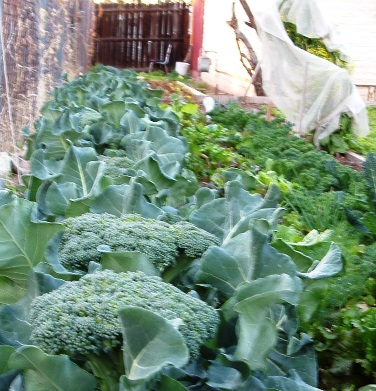
The future of sustainable agriculture will be in small to medium scale organic food gardens grown right in our cities. Come learn how to set up a complete garden system from one of Tucson’s best organic gardeners. Kim will show you how to increase your garden’s health, production, and nutrient value, using an integrated system of on site earthworms, compost mulches, and organic soil amendments to improve fertility, structure and life in your soil. As a bonus you will see how chickens can be integrated into the system also.

Time: 9AM – 1PM

Cost: $39 – includes all course materials. Taught by Kim Fox. Contact Dan Dorsey (520) 624-8030 dorsey@dakotacom.net for registration. Please contact Kim for more information on this course at (520) 622-1917. Class limit is 15 participants.

TBA - Natural Building and Passive Solar Design

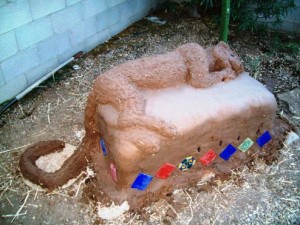
We’ll have fun doing hands on workwebsize-mixing-cob-too1 with straw bales, adobe blocks, mud based plasters, cement based plasters, cob, and home made paints, building small structures like benches and walls that you can construct at your own place. After this hands on work in the morning we will talk a little about the building codes related to these materials. After lunch we will talk about the main principles of good passive solar design. We will emphasize integrated design throughout the class and getting back in touch with the patterns of nature to make good design decisions. We’ll show how wowebsize-doggie-cobrking wsb-4a-websizeith these natural building materials can make our living environments healthy, beautiful, and comfortable.   Location: T.B.A. in central Tucson. Directions sent with registration.Time: 9AM to 4:30PM Cost: $69 – includes all course materials.  Taught by Dan Dorsey and other teachers (520) 624-8030 dorsey@dakotacom.net www.sonoranpermaculture.org/members/dan-dorsey
Call or e-mail Dan for registration or information. Picture of straw bale wall courtesy of Watershed Management

TBA - Complete Hands On Water Harvesting

Learning how to use rainfall and storm water run-off is one of the keys to developing a successful Permaculture site. It helps us to reduce erosion and have a lush multi use landscape without having to import water from outswebsize-water-harvesting-basins-frontide a site. In this fun workshop we will install a water cistern, learn how to read the water situation on a site, and do basic calculations on the water flow available. We will learn how to install basic earthworks to hold water on site, and talk about contours, plant selection, and mulching. This workshop is more than learning about techniques for harvesting rainfall; it will show you how water harvesting can be integrated into your own lifestyle and into a simple landscape Swale with water in itdesign for your home.
Location: Central Tucson Location, TBA. This class is limited to 15 participants.
Time: 9AM to 4:30PM
Cost: $59 includes all class materials
Taught by Dan Dorsey (520) 624-8030 and guest instructors dorsey@dakotacom.netwww.sonoranpermaculture.org/members/dan-dorsey call Dan for registration or information

TBA - Native Food and Herbs


Foods and Herbs collected during their seasons will be integrated into recipes featured in Barbara’s and Jill’s new cook booklet, “Wild Recipes, Seasonal Samplers”. We will prepare and share a feast for a wild and wonderful taste of the desert – our home. Wear comfortable clothes and walking shoes, as we will be identifying native plants in the field. Class size is limited to 15 participants.
Location: Bean Tree Farm at Dancing Rocks Community, 15 miles north of downtown Tucson. Directions and more info sent with registration.
Time: 10AM to 3PM
Cost: $65 – partial scholarships available as class registration allows. Includes all class materials.
Instructors: Barbara Rose and Bean Tree Farm staff  www.beantreefarm.com or www.sonoranpermaculture.org/members/barbara-rose

Tuesday evening, TBA – Build A Straw Bale House or Wall

Co-Sponsored by Pima Community College
P and B straw bale wall raising

In this non-hands on seminar you will learn about straw bale construction and the advantages of super insulation, thick walls, and ease of construction. Handouts and a complete discussion of the current straw bale code, detail drawings of windows and doors, and additional tips to make your building experience easier are included. This class also includes a complete slide show from start to finish on how to build a straw bale house or wall, as well as a demonstration of special tools and props that work well with straw bale construction.
Location:
Time: 6:30 PM to 9 PM
Cost: $29,  Call PCC at 206-6468 to register
Class size is limited to 15 participants
Taught by Dan Dorsey, B.S., local straw bale designer of over 60 permitted single family residences and auxillary buildings throughout Arizona.

faqs on registering for our one day Fall classes…

How do I register for a one day class?

You are registered for a class when we receive you payment in full. There are three ways to pay or register for a class…

1. Checks and money orders can be made out to our non-profit: “NEST/Sonoran Permaculture Guild”. Please mail only checks and money orders (no cash) to: Sonoran Permaculture Guild, c/o Dan Dorsey 221 E. Linden Tucson, AZ 85705. Include your return address, e-mail, and phone number, and you will be sent an e-receipt confirming your registration

2. Cash, money orders, or checks can also be handed directly to Dan Dorsey or the contact person for the class in person, and a receipt will be issued to you at that time. Call the contact person listed for the class to schedule a time to meet. Our central Tucson office is one and a half miles north of downtown Tucson.

3. You can pay by major credit card as we are set up through PayPal to handle those transactions, or if you already have a PayPal account you can pay from your existing PayPal balance. E-mail dorsey@dakotacom.net for this option, and I will e-mail you on how to use your major credit card or existing PayPal balance.

If after I register and pay, and the course starts, what if I need to cancel out?

Our refund policy is as follows: Up to two weeks before the class, you will receive a full refund minus a $5 refund and processing fee. Up to one week before the class you will receive two thirds of the class fee as a refund minus $5. Less than one week before the class we will refund one third of the class fee minus $5, although if the class is full with a waiting list, and we can fill your cancelled spot, you will receive a full refund minus a $5 refund and processing fee

Is there work-trade exchange available?

There might be a limited amount of work trade for these classes. We don’t have the resources to offer a full work trade. Putting on high quality yet reasonably priced workshops is our main source of income and the main reason for our non-profit.

Can I get college credit for taking this class?

Some of our students have been university or college students, and they have worked with their departments at the University of Arizona, Prescott College, and Pima Community College to obtain independent study credit for taking our courses and classes. It is up to the individual student to work out arrangements with his/her college and his/her department.

What if I have additional questions about what to expect in the classes?

Call or e-mail the contact person for each class listed.